The future of an agricultural enterprise is determined not by the number of silos, but by the quality of the decisions made long before construction begins.
A modern agricultural enterprise is no longer simply a collection of silos, conveyors, dryers and production buildings. In recent years, Ukraine’s agricultural sector has changed significantly, and approaches to design have changed along with it. That is why today Design & Construction Company CHIEF views the development of an agricultural enterprise not merely as a construction task, but as a comprehensive engineering challenge in which technology, economics, energy, automation, logistics and opportunities for future development must function as a single system. This approach is becoming particularly important for Ukrainian businesses operating amid unstable energy supply, labour shortages, changing logistics routes, wartime risks, fluctuating harvest volumes and the constant need to improve economic efficiency.
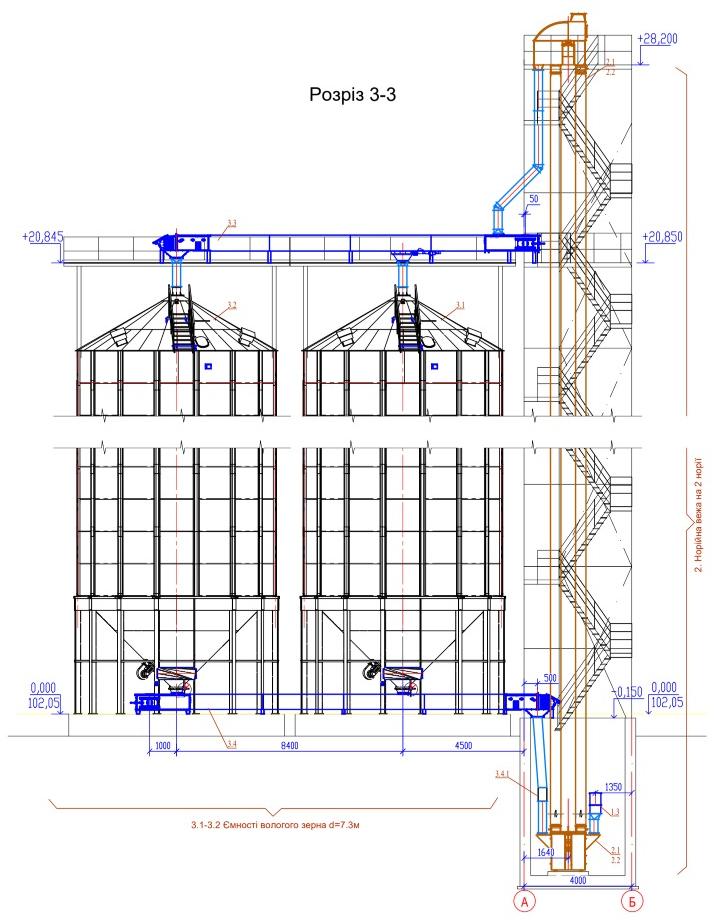
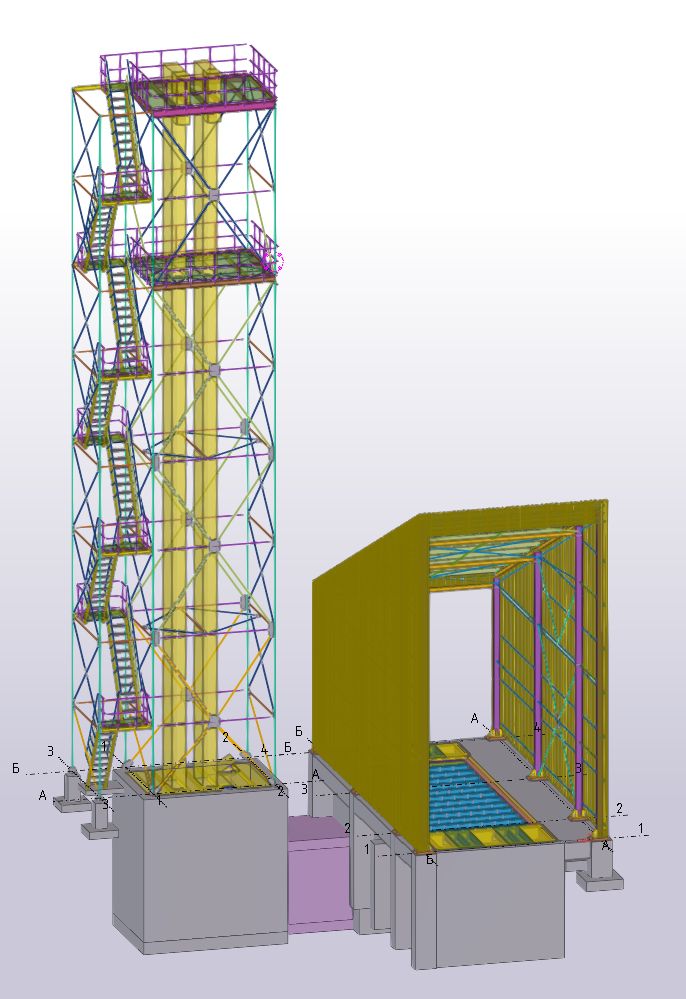
Only a few years ago, the design of an agricultural enterprise often began with determining the required capacity. Equipment was then selected, the number of silos calculated, and dryers, grain cleaning systems, conveying equipment, laboratories and administrative facilities were incorporated into a single technological complex. The logic was straightforward: the greater the capacity, the larger the facility and the more modern it was considered. For a long time, this model corresponded to the needs of Ukrainian agribusiness, which was actively expanding, increasing land holdings, developing exports and investing in large grain storage complexes. Capacity was at the centre of the project.
Today, the focus has shifted. A Ukrainian agricultural enterprise can no longer be viewed simply as a collection of technological facilities. It must be a system capable of operating under different scenarios: with limited power supply, staff shortages, changing logistics, uneven raw material intake, damage to individual technological units, or the need to quickly expand or modify production capacity. Therefore, today’s designers must answer not only the question of how to build an enterprise, but also a far more complex one: how will it operate in five, ten or fifteen years?
From Scale to Efficiency
Only a few years ago, the design of an agricultural enterprise often began with determining the required capacity. Silos, dryers, grain cleaning systems, conveying equipment and other technological elements were then selected. The logic was simple: the greater the intake, drying and storage capacity, the larger and more modern the facility was considered. This approach reflected a period of active growth in Ukrainian agribusiness, when companies were expanding their land holdings, increasing exports and investing in large grain storage complexes.
Today, the situation has changed. High capacity alone no longer guarantees high efficiency. An enterprise may have substantial storage capacity while losing profitability due to expensive drying, excessive electricity consumption, transport downtime, insufficient automation or excessive staffing requirements. As a result, different questions are becoming increasingly important: how much does it cost to process one tonne of grain through the facility, how much energy is consumed by technological operations, where are the bottlenecks, and how many people are actually required to ensure stable operation?
Modern design begins not with drawings, but with an economic model. It is necessary to evaluate not only capital expenditure for construction, but also future operating costs. The length of conveying routes, the number of transfer points, lifting heights, grain storage configurations, drying equipment performance and the number of electric motor start-ups directly affect the cost of handling every tonne. Equipment that is cheaper during construction does not necessarily result in a less expensive enterprise over ten years of operation.
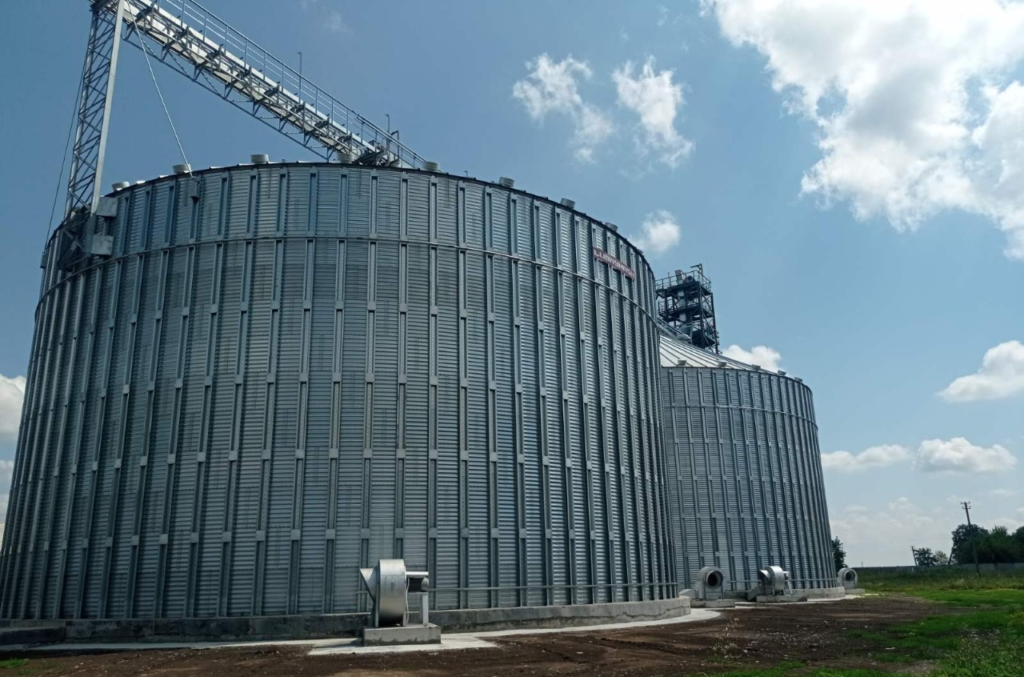
The shift is particularly evident in grain storages. A grain storage complex is no longer simply a place to store grain. It is becoming an integrated system in which technological, material handling, energy and information flows interact. That is why a well-designed technological scheme can often be more important than simply increasing the number of silos.
Participants in the Ukrainian market are already observing a shift in investment priorities from large-scale new construction towards the modernisation of critical areas, including automation, drying energy efficiency, increased processing speed and greater operational flexibility. This means that a modern agricultural project must not simply offer high capacity; above all, it must be economically justified. Energy is becoming one of the central elements of project design. Drying is one of the most energy-intensive processes, which means that the efficiency of the dryer, heat generator, conveying equipment and control systems directly affects the economics of the enterprise. In a modern project, the energy system should not be considered separately from the technology itself. Generators, energy storage systems, solar generation and automated load management are gradually becoming part of the overall concept of the enterprise.
From Construction to Creating a Resilient System
Another important shift is the move away from the idea that an enterprise should be built immediately for its maximum future capacity. Today, modularity is becoming increasingly important. An enterprise must operate efficiently today while retaining the ability to add silos, drying capacity, receiving facilities, a new processing line or downstream production in the future without completely rebuilding the existing system. This approach is particularly relevant to agribusiness, as market conditions and production structures can change. A company’s land bank may expand or contract, logistics may change, crop portfolios may shift, and the overall business direction may evolve. An owner focused on grain storage today may move into feed production, packaging or another type of processing within a few years. Therefore, future development opportunities should be incorporated from the very first stage of project design.
Reconstruction is also becoming increasingly important. Ukraine needs not only to build new facilities, but also to restore damaged infrastructure and modernise enterprises created under very different technological and economic conditions. Reconstruction is often more complex than building from scratch because designers must work with existing foundations, silos, galleries, utility networks and material handling routes. At the same time, production downtime must be kept to a minimum. Modern reconstruction therefore often involves a phased transformation of the technology: constructing a new unit, redirecting material flows, dismantling obsolete equipment, connecting new systems and gradually transitioning to a modernised production model. In this case, the designer effectively creates not only the final facility, but also a roadmap for the transition from the old system to the new one.
The concept of reliability has also changed. Today, a reliable enterprise is not simply one equipped with high-quality machinery. It should have backup power, alternative technological routes, the ability to maintain partial operations when an individual unit fails, protected automation systems and a well-designed safety strategy. The key question is no longer whether a failure can stop a particular process, but rather how much of the enterprise can continue operating even under non-standard conditions.
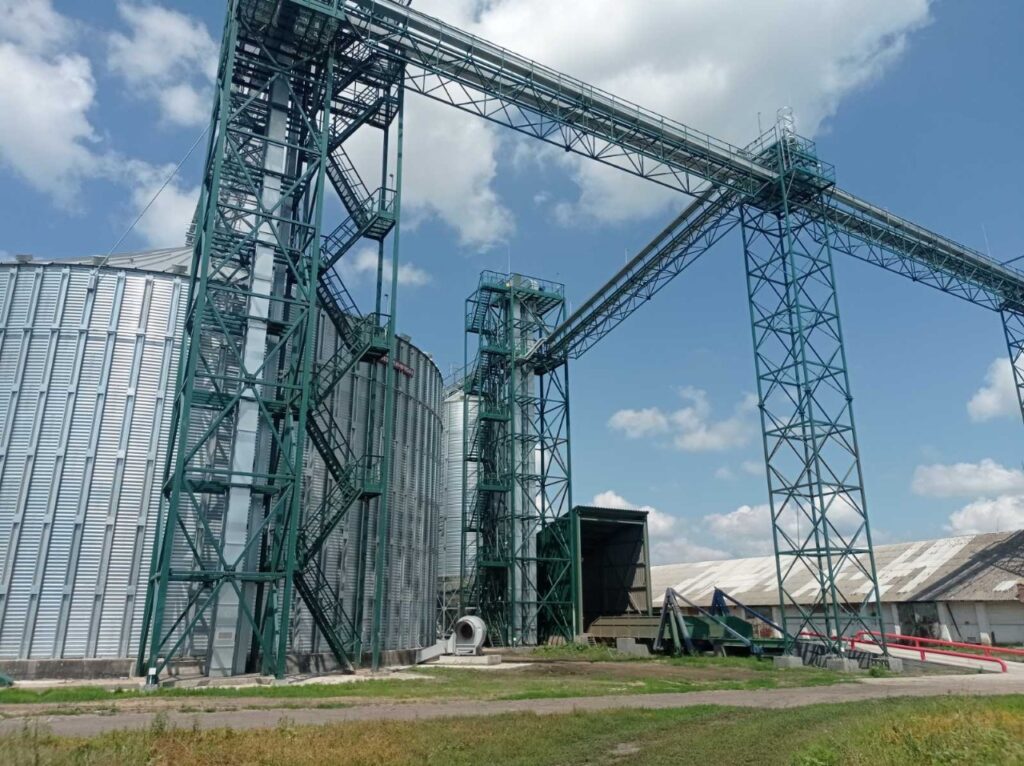
This is why an enterprise should be designed around flows rather than individual machines. The journey of the grain should first be mapped from the moment a truck enters the site to the dispatch of the finished batch, after which the appropriate technological solutions can be selected. Receiving, laboratory operations, cleaning, drying, storage, batch formation and dispatch must all be analysed as parts of a single system. Such an approach makes it possible to identify bottlenecks and eliminate unnecessary operations. Every additional metre of conveying, every extra transfer point and every unnecessary technological operation ultimately has a cost.
At the same time, Ukrainian agribusiness is moving towards deeper processing. Grain is increasingly viewed not as a final commodity, but as a raw material for creating products with higher added value. This is why feed mills, oil extraction plants, packaging lines and other processing facilities may increasingly appear alongside grain storage complexes. Even if processing is not planned as part of the initial phase, the possibility of implementing it should be considered during the development of the original project.
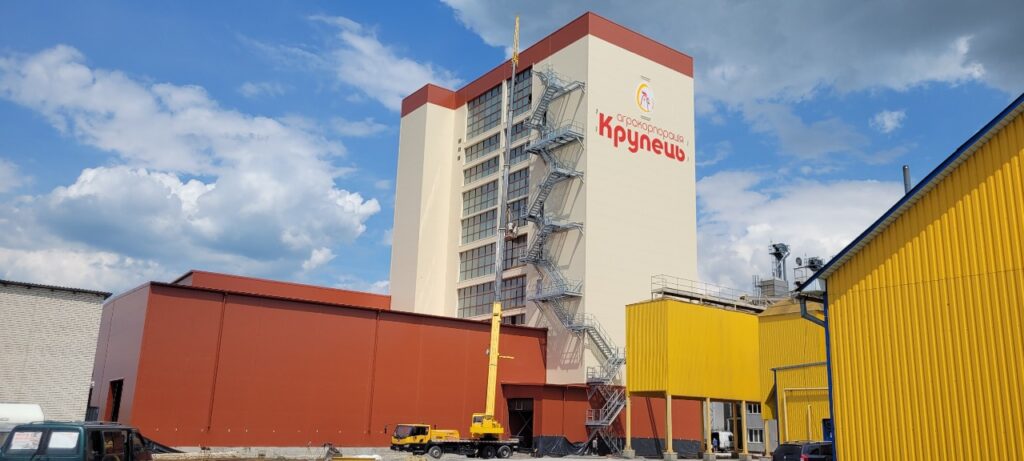
As a result, the agricultural enterprise of the future increasingly resembles not a static facility, but a system that must evolve together with the business. It must be ready to adapt to changes in logistics, energy conditions, production structures, workforce availability and technology. This ability to adapt is becoming one of the most important characteristics of modern agricultural infrastructure.
From Construction to Integrated Engineering
This is why modern designers must ask questions that go far beyond drawings. Is the planned capacity actually necessary? Where will the bottleneck be? Can the energy system handle peak loads? What happens in the event of a power outage? How will the enterprise operate with a shortage of personnel? Will it be possible to add a new technological line in five years? The answers to these questions often have a far greater impact on the economics of an enterprise than a minor reduction in the cost of individual equipment.
The future of agricultural project design is therefore increasingly associated with a scenario-based approach. A project should account for normal and peak seasons, changes in harvest volumes, high moisture content in raw materials, limited energy supply, labour shortages, changing logistics and potential failures of individual technological units. Under this approach, a project becomes more than a static layout. It becomes a model of the future enterprise. The main lesson of recent years is that a modern agricultural enterprise should not be designed solely for today’s operating conditions. It must remain efficient in a world that is constantly changing. This is why the most valuable asset is no longer the maximum number of silos or the highest possible capacity, but the ability of an enterprise to adapt, modernise and develop.
Today, Ukraine has an opportunity not simply to restore lost agricultural infrastructure, but to create a new model — one that is more technologically advanced, automated, energy-efficient and resilient. The quality of engineering decisions made long before construction begins will largely determine how competitive Ukrainian agribusiness will be in the future.
Design & Construction Company CHIEF is open to cooperation with agricultural enterprises, investors and partners planning the construction, reconstruction or modernisation of production infrastructure. After all, an efficient enterprise of the future begins long before the first foundation is laid — with the right technological and engineering concept.
DCC CHIEF
Tel.: +38 (050) 836-20-05
email: info@pbk-chief.com
website: pbk-chief.com
Partnership begins with understanding the challenge — and that is exactly where DCC CHIEF invites the conversation to begin.