Modern grain storage has long since evolved beyond being simply a place for temporary crop storage. Today, it is a sophisticated engineering system whose performance directly affects not only grain quality but also the efficiency of logistics operations, energy consumption, overall productivity, and the economic performance of the business. For agricultural enterprises, grain storage operators, processing plants, and grain traders, grain storage has become a critical component of production infrastructure, with a direct impact on business competitiveness.
In recent years, the requirements for grain storage systems have changed significantly. Higher crop yields, increasing export volumes, the need for faster logistics, stricter grain quality standards, and the adoption of digital technologies are driving new approaches to grain storage design. While ensuring sufficient storage capacity was the primary objective a decade ago, today’s key priorities include efficient process design, automation, energy efficiency, operational safety, and the ability to expand the complex as business needs grow.

Industry experience shows that most operational problems originate during the design phase. Poorly planned traffic flow, incorrect equipment selection, inaccurate capacity calculations, or failure to account for future business growth can result in substantial financial losses. Correcting these shortcomings after a grain storage complex has been commissioned often requires significantly greater investment than preventing them during project development.
For this reason, the role of professional engineering designers has become one of the most important factors in the success of a grain storage investment project. Today, an engineering designer is far more than a specialist who prepares technical documentation. They serve as the client’s engineering partner, helping to develop the optimal technological concept, assess future operational risks, select the most effective engineering solutions, and maximize the long-term return on investment.
One example of this comprehensive approach to the design and construction of agro-industrial infrastructure is DCC CHIEF, a design and construction company specializing in engineering and construction projects for the agricultural sector. The company delivers projects where success depends not only on sound construction practices but also on a thorough understanding of the technological processes involved in agricultural production, grain storage, and processing.
When developing modern grain storage complexes, feed mills, and other agro-industrial facilities, DCC CHIEF applies a fully integrated approach—from analysing the client’s requirements and developing the initial concept to engineering design, equipment selection, construction, and commissioning. This methodology helps eliminate the common issues that arise when different stages of a project are carried out without proper coordination.
Modern engineering design also requires the comprehensive evaluation of numerous interconnected factors. Engineers must consider not only an enterprise’s current operational requirements but also future market trends, potential changes in logistics routes, the development of transport infrastructure, environmental regulations, and the integration of digital technologies and automated production management systems.
This has become particularly important as Ukraine’s agro-industrial sector continues to modernize. Many businesses are upgrading existing grain storage complexes or constructing new ones in accordance with modern international standards. The success of these investment projects depends largely on the quality of the engineering decisions made long before construction begins.
At this stage, the expertise of a professional engineering team is essential. The accuracy of engineering calculations, the selection of the optimal process layout, the correct assessment of equipment capacity, and careful planning for future expansion determine not only the cost of construction but also the long-term efficiency of the enterprise throughout its entire operational lifecycle.
Developing the Grain Storage Concept: The Foundation of a Successful Project
The development of a modern grain storage complex begins not with the selection of silos or process equipment but with a thorough analysis of the facility’s intended purpose. Before the design process even begins, it is essential to determine the role the complex will play within the agricultural business. Will it serve the producer’s own storage needs, operate as a commercial grain storage complex receiving grain from multiple suppliers, or function as part of an integrated production operation that includes grain processing or feed manufacturing? Each of these models requires a different engineering approach. A commercial grain storage complex must provide high-capacity grain receiving, efficient laboratory quality control, the ability to handle multiple crop types simultaneously, and optimized logistics. In contrast, an on-farm grain storage complex should be tailored to the producer’s specific operations, cropping structure, and actual production volumes. This is where professional engineering design becomes essential. The role of the engineering team extends far beyond preparing technical documentation. Their objective is to develop a comprehensive model of the future enterprise that reflects the client’s operational requirements, economic objectives, and long-term development strategy.
When developing a project concept, DCC CHIEF’s engineering specialists conduct a comprehensive assessment of the future grain storage complex. They evaluate projected production volumes, crop composition, seasonal delivery patterns, drying and cleaning requirements, logistics flows, grain quality requirements, and opportunities for future expansion. This approach enables the company to create not simply individual structures but fully integrated technological systems that support reliable operations and long-term efficiency throughout the entire lifecycle of the enterprise.
Determining Capacity and Throughput: Balancing Investment and Efficiency
One of the most critical stages of engineering design is determining the optimal capacity and throughput of a future grain storage complex. These parameters have a direct impact on both the efficiency of the investment and the enterprise’s long-term growth potential. Excess capacity can lead to unnecessarily high construction costs and extended payback periods, while insufficient capacity may restrict business development within just a few years. The primary objective of the engineering team is therefore to achieve the optimal balance between storage capacity, grain receiving rates, drying capacity, loading performance, and future expansion requirements.

One of the most common design mistakes is relying solely on average annual operating figures. In reality, grain storage complexes experience their highest workloads during the relatively short harvest season, when grain must be received as quickly as possible. If the receiving system lacks sufficient capacity, transport queues can develop, harvesting equipment may remain idle, grain quality can deteriorate due to delays, and operating costs increase. For this reason, professional engineering design includes evaluating multiple operating scenarios and ensuring that the complex can perform efficiently under peak seasonal workloads.
Process Design: The Foundation of an Efficient Grain Storage Complex
A modern grain storage complex is a sophisticated technological system in which every process is interconnected. Grain receiving, laboratory quality control, cleaning, drying, conveying, storage, and dispatch must operate as a single integrated system. A well-designed process layout minimizes unnecessary grain handling, reduces energy consumption, improves equipment performance, and ensures consistent product quality.
One of the most common design mistakes is developing a grain storage complex without considering the future growth of the business. For example, a facility may initially operate efficiently with a single crop, but within a few years it may need to store wheat, corn, sunflower, and other commodities simultaneously. If this flexibility was not incorporated into the original design, upgrading the complex can require substantial additional investment. For this reason, modern engineering design must address not only current operational requirements but also the enterprise’s long-term expansion potential.
Equipment Selection: An Engineering Decision, Not Simply a Cost Comparison
Selecting process equipment is one of the most critical decisions in the development of a grain storage complex. Silos, grain dryers, conveying systems, cleaning equipment, ventilation systems, and automation technologies must function as one coordinated system. Equipment selection should therefore be based not only on purchase cost but, more importantly, on compatibility with the overall process design, throughput capacity, energy efficiency, reliability, serviceability, and seamless integration with every other element of the complex.
When delivering agro-industrial projects, DCC CHIEF places particular emphasis on the interaction between structural design, process equipment, and engineering systems. This integrated approach makes it possible to develop balanced facilities in which every component operates at maximum efficiency while contributing to the overall performance of the enterprise.
Automation and Digital Technologies in Modern Grain Storage
A modern grain storage complex cannot operate efficiently without digital management and control technologies. Automation is no longer an optional feature—it has become one of the fundamental elements of efficient grain handling operations. During the design stage, engineers should incorporate automatic grain temperature monitoring, remote process monitoring, automated conveying system controls, digital inventory tracking, and integration with enterprise management systems.
The implementation of automated technologies reduces the impact of human error, improves monitoring accuracy, enables rapid detection of operational issues, and optimizes overall operating costs. One of the most common mistakes is attempting to introduce digital technologies only after construction has been completed. In today’s industry, automation must be incorporated from the concept development stage, because it is at this point that the operational architecture of the future enterprise is established.
Energy Efficiency as a Competitive Advantage
With energy costs continuing to rise, energy efficiency has become one of the defining factors of a successful grain storage project. During the design phase, engineers must evaluate the efficiency of grain drying systems, optimize material handling flows, incorporate high-efficiency motors, implement automated control systems, and assess opportunities to integrate alternative energy sources. Particular attention should be given to grain drying, as it is often the most energy-intensive operation within a grain storage complex. Selecting the right equipment, designing an efficient process layout, and implementing effective control systems can significantly reduce operating costs while improving the long-term economic performance of the enterprise.
A well-designed grain storage complex is far more than a place to store grain. It is a modern technological system that supports reliable operations, economic efficiency, and the long-term growth of an agricultural business. This comprehensive engineering philosophy is the approach adopted by professional design teams such as DCC CHIEF, where every technical decision is evaluated in terms of its practical value, reliability, and long-term benefits for the client.
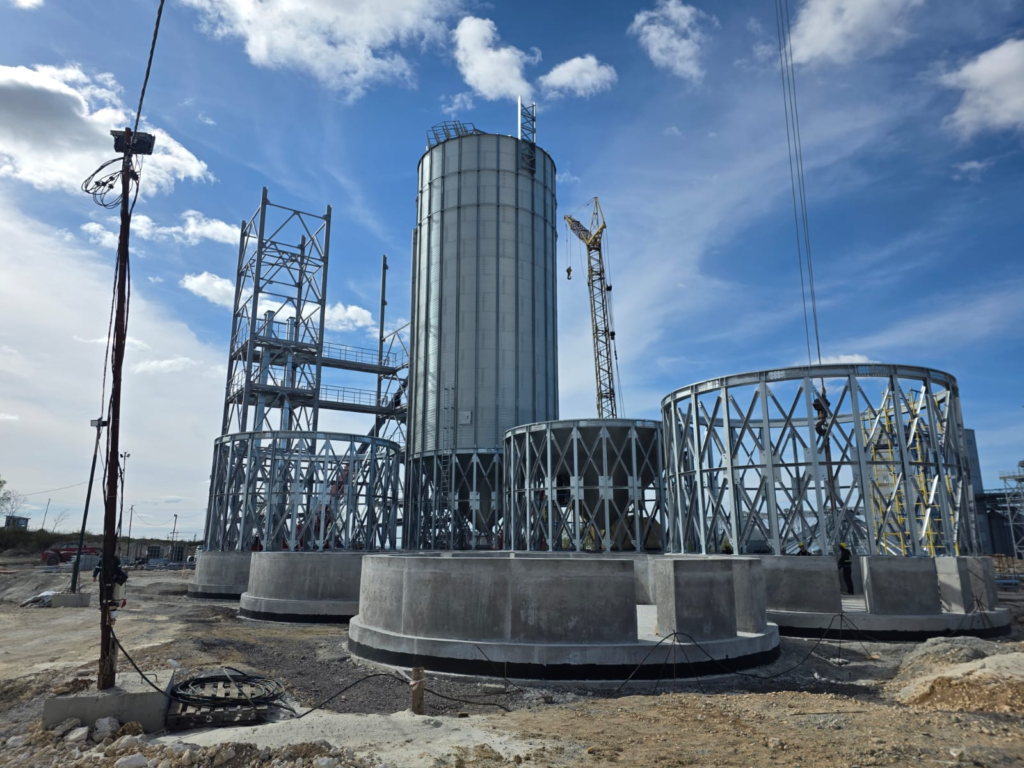
Experience gained from delivering agro-industrial projects demonstrates that the most successful solutions are those in which every component – from structural design and foundations to process equipment and digital control systems – is treated as part of a single integrated system. This holistic approach enables the creation of facilities that meet today’s market requirements, deliver dependable operational performance, and provide the flexibility needed for future expansion.
Ultimately, a modern grain storage complex free from costly design mistakes is the result of careful planning, professional engineering design, and a comprehensive engineering approach. Investing in a high-quality project at the earliest stage helps prevent significant future expenses, improves operational efficiency, and establishes a solid foundation for the long-term growth of an agricultural business. For this reason, selecting an experienced engineering partner is one of the most important factors in the successful delivery of any agro-industrial project.
DCC CHIEF welcomes cooperation with agricultural enterprises, investors, industrial companies, and partners seeking to develop modern, efficient, and reliable agro-industrial infrastructure. Combining engineering expertise, practical experience, and a comprehensive approach to project delivery, the company is ready to support the development of new projects, the modernization of existing operations, and the creation of innovative production complexes.