The future of feed production lies in technologies that help manufacturers obtain more high-quality products from every tonne of raw materials, every kilowatt of energy, and every hour of operation.
Feed production in Ukraine is gradually entering a new technological reality. While in the past the primary task of an enterprise was to produce the required volume of feed, today the focus is shifting towards consistent quality, cost control, energy efficiency, automation, and the ability to respond quickly to market changes. This is why a modern feed mill can no longer be seen as simply a collection of machines installed one after another. It is an integrated system in which every technological operation affects the next, and the final result is determined not by an individual piece of equipment but by how effectively the entire production chain operates.
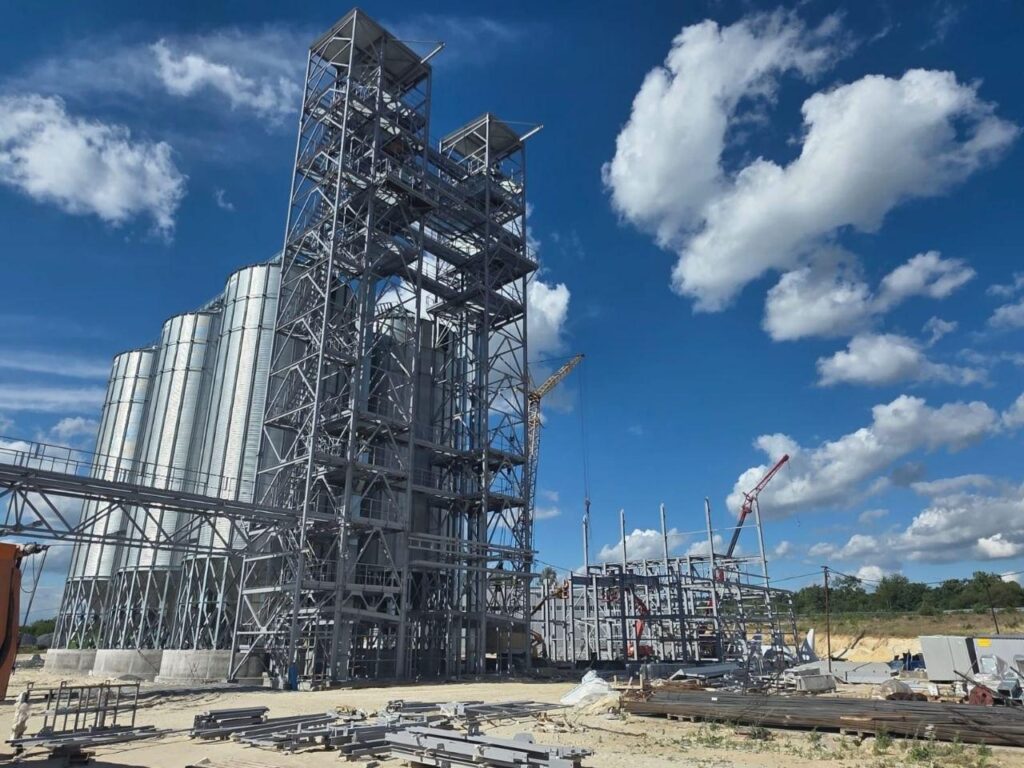
For agricultural enterprises, investing in feed production has become a strategic decision. In-house grain processing makes it possible to better control the use of raw materials, develop formulations tailored to the needs of livestock and poultry production, reduce dependence on external suppliers, and create added value directly within the enterprise. At the same time, however, the requirements for technology are increasing. A feed mill must not only be productive but also predictable in operation, economical in its use of resources, and convenient to maintain.
This is why the selection of equipment for a feed millshould begin not with the question of which machine to purchase, but with an understanding of what the future production should look like. It is necessary to determine which types of raw materials will be used, which formulations are planned, what production capacity the enterprise requires, in what form the feed will be produced, how frequently formulations will change, and whether the production line should have capacity for future expansion.
This systematic approach is now one of the key principles followed by modern engineering companies. In particular, the Design and Construction Company **CHIEF** works with agricultural and industrial enterprises through an integrated engineering approach, combining design, construction solutions, equipment supply and installation, automation, commissioning, and ongoing service. In the field of feed production, the company cooperates with the Dutch manufacturer Van Aarsen, whose technologies are used in the construction and modernization of modern feed production lines. Van Aarsen offers equipment for various stages of the technological process, from raw material preparation to pelleting and cooling of the finished product. Through an integrated approach, these technologies make it possible to create production facilities designed for stable operation and further development.
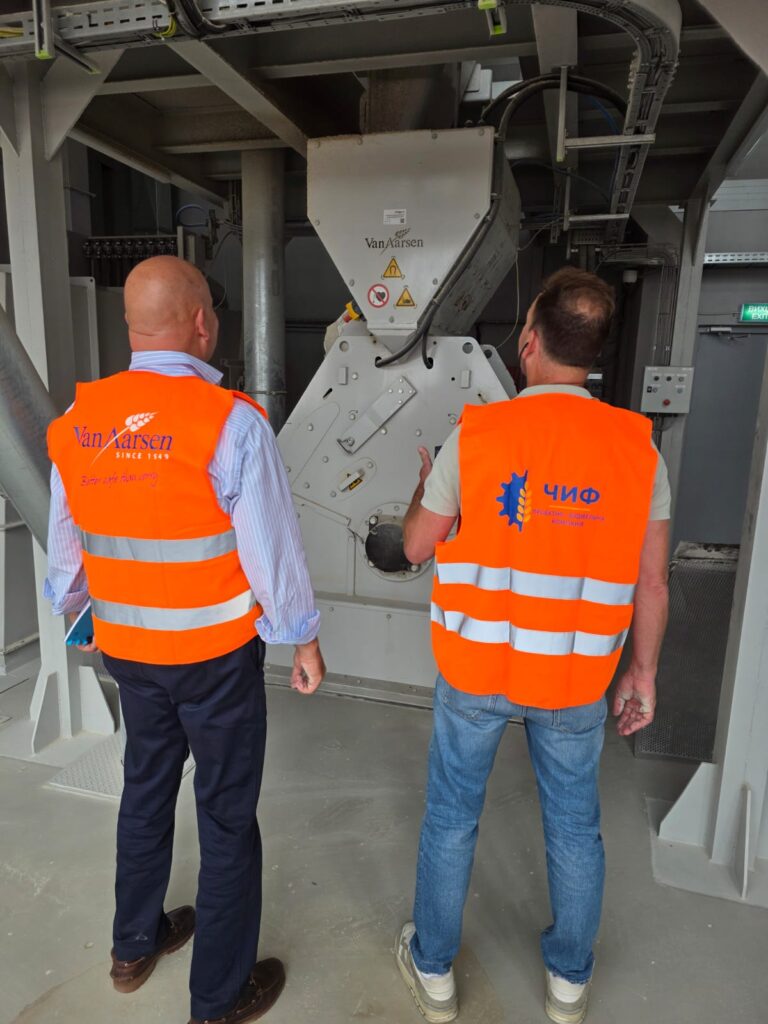
However, before discussing equipment, it is important to understand the logic of feed production itself. Every feed mill begins with raw materials. Grain, protein components, minerals, premixes, oils, and other ingredients must pass through a series of technological operations before becoming finished feed. If even one stage operates inconsistently, it can affect the entire production process.
One of the first important operations is the cleaning and preparation of raw materials. The quality of incoming ingredients directly affects the operation of subsequent equipment. Foreign impurities, variations in moisture content, or inconsistent grain characteristics can place additional strain on machinery and complicate further processing. Therefore, a modern feed mill must have a receiving, cleaning, conveying, and raw material preparation system capable of ensuring a consistent material flow. The grain and other components are then processed through the grinding stage. The hammer mill is one of the fundamental machines in a feed production line, but its role is far more important than it may initially appear. Particle size affects the quality of subsequent mixing, the behaviour of the feed mixture during conditioning, and the efficiency of pelleting.
An excessively coarse particle size can negatively affect feed uniformity, while excessively fine grinding increases energy consumption. Therefore, the task of a modern grinding system is to achieve the required particle size distribution with optimal electricity consumption. The key is finding the right balance between raw material preparation quality and process economics. After grinding comes one of the most critical stages: ingredient dosing. Modern feed formulations may contain a large number of components, and each of them must be introduced into the mixture in the correct quantity. Micro-components, premixes, mineral additives, and other ingredients added in small quantities require particularly high accuracy. This is why modern production facilities use automated dosing and micro-dosing systems. Their purpose is not simply to measure a specific quantity of an ingredient. They must ensure formulation repeatability. If the same recipe produces different results each time, the enterprise loses control over both product quality and production costs.
Dosing is followed by mixing, during which all ingredients must be transformed into a homogeneous feed mixture. This is where the mixer plays a crucial role. In practice, mixing is a more complex process than it may seem. Ingredients differ in density, particle shape, moisture content, and physical properties, making it essential to ensure their uniform distribution throughout the entire volume of the mixture.
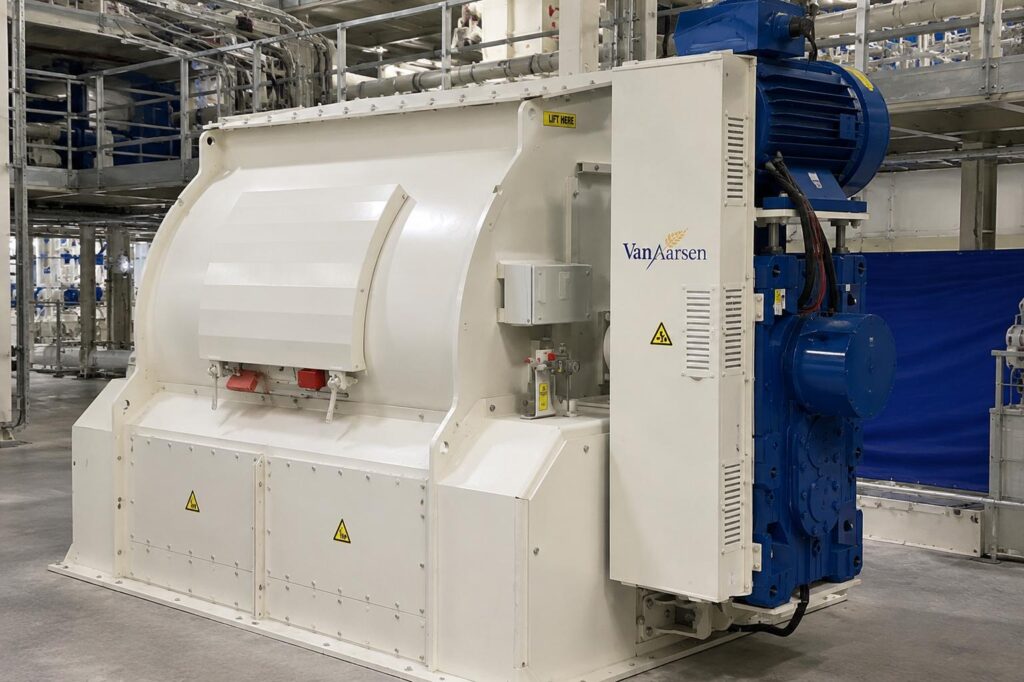
A high-quality mixer must operate quickly while avoiding unnecessary damage to the ingredients. Its capacity must be properly coordinated with the dosing system, conveying equipment, and the subsequent stage of production. It is precisely these interconnections that form the foundation of a modern feed production line.
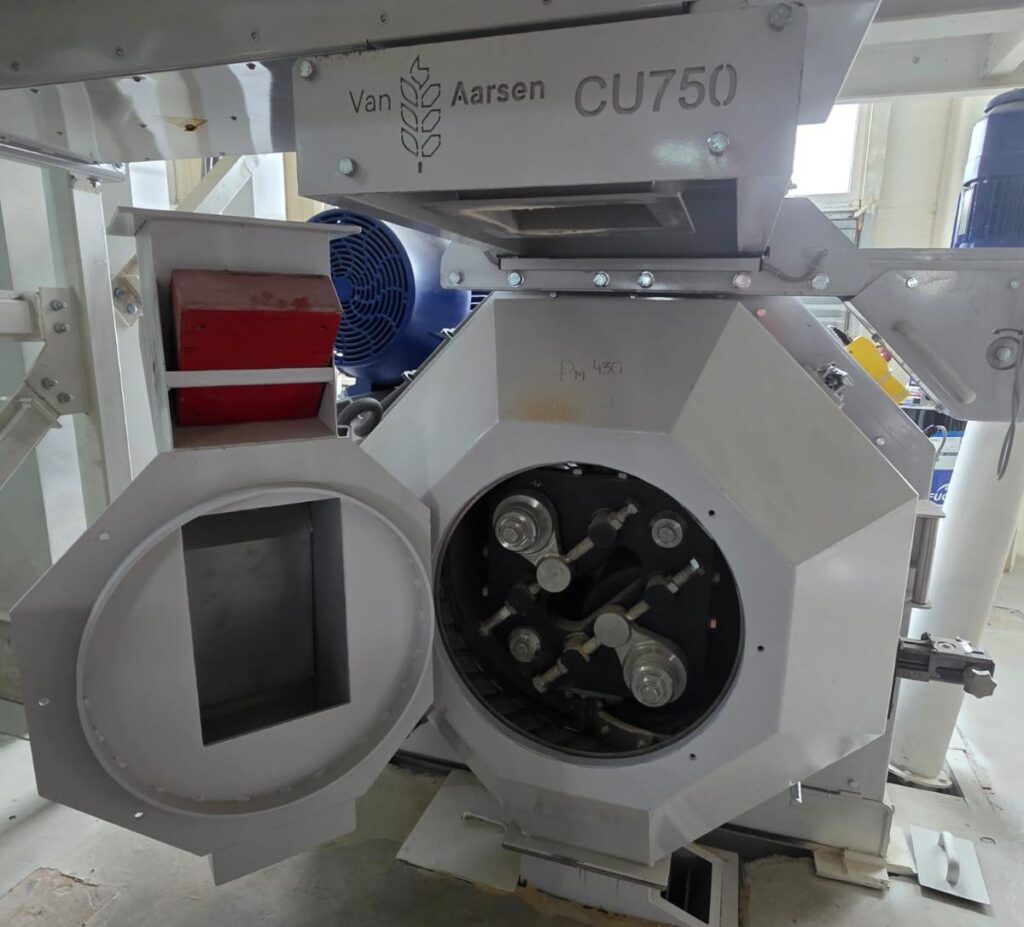
Pelleting occupies a special place in feed production. It is at this stage that the prepared mixture is transformed into pelleted feed, making it easier to transport, store, and use. However, the efficiency of a pellet mill depends not only on its mechanical characteristics. Before pressing, the mixture must be properly prepared.
Conditioning is an important part of this process. Steam, temperature, moisture, and retention time all influence the properties of the mixture and the conditions under which it passes through the pellet mill. This is why modern technologies are increasingly focused not simply on the capacity of the press, but on the quality of product preparation before pelleting.
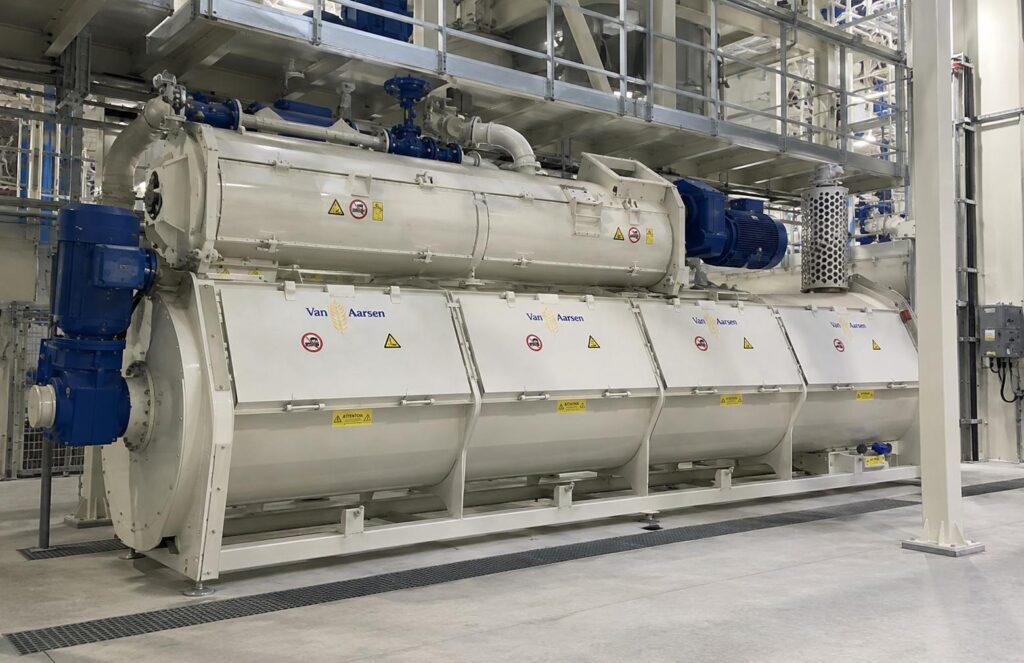
Van Aarsen solutions incorporate conditioning technologies that make it possible to control the processing parameters of the feed mixture. In particular, the LTV conditioner provides extended product retention, allowing the process engineer to manage feed preparation before pressing with greater precision. Depending on the formulation and operating conditions, the retention time can be adjusted, providing additional flexibility in configuring the technological process. This is important for several reasons. Proper conditioning can positively affect pellet quality, the stability of the pellet mill, and energy efficiency. Thus, even a technological operation that may initially appear minor can have an impact on the economics of the entire production process.
The pellet mill itself should also be evaluated based on more than just its capacity. In modern production, an important indicator is the amount of time during which equipment is actually operating. Even the most powerful machine will not deliver the expected results if a significant portion of its working time is spent on changeovers, cleaning, or maintenance. This is why equipment manufacturers are paying increasing attention to the convenience of service operations. Fast replacement of working components, easy access to key assemblies, simple maintenance procedures, and the availability of spare parts can be just as important to an enterprise as nominal capacity. At Van Aarsen, this approach is incorporated directly into the equipment design: large service doors, ergonomic access to key components, and the Quick Fit system for fast die replacement help reduce downtime. For a feed mill, this means that maintenance has less impact on the overall production rhythm.
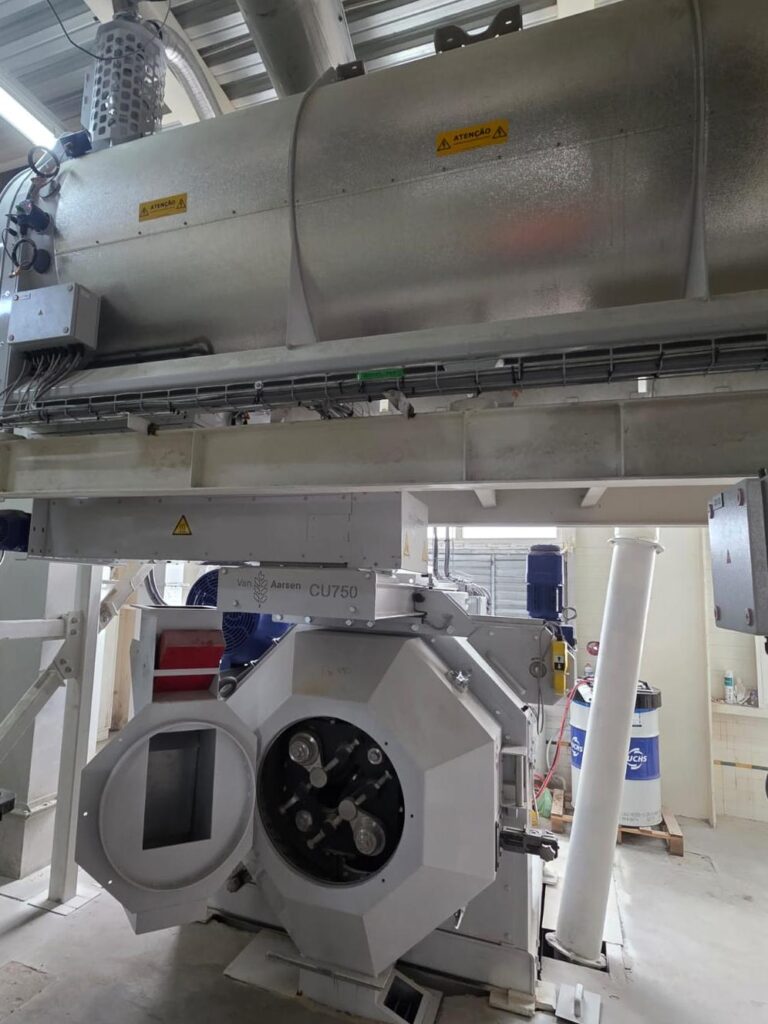
The handling of liquid components is also becoming increasingly important. Oils, enzymes, and other additives can be introduced at different stages of the technological process depending on the formulation and the requirements for the finished feed. This expands the manufacturer’s capabilities and makes it possible to create products with different characteristics. As a result, modern feed production lines are becoming increasingly flexible. They must allow manufacturers to produce different types of products, change formulations quickly, and adapt to the specific needs of an individual enterprise.
Special attention should also be given to conveying equipment, as raw materials and finished products are constantly moved between different processing stages in a large feed mill. Bucket grain storages, conveyors, screw conveyors, bins, and other material handling systems effectively form the “circulatory system” of the enterprise. If even one element has insufficient capacity or operates inconsistently, it can become a bottleneck for the entire production process.
This is why the proper design of material handling systems is just as important as the selection of the main process equipment. At Design and Construction Company CHIEF, this principle is taken into account from the very beginning of the design process, when the future flow of raw materials and finished products is calculated in accordance with the entire technological scheme of the enterprise. This includes the required equipment capacity, material flow routes, bin capacities, elevation levels, loading and unloading points, accessibility for maintenance, and opportunities for future production expansion.
It is at this stage that the difference between simply supplying equipment and providing integrated engineering becomes particularly clear. A company can purchase modern machinery from leading global manufacturers, but without a properly designed process flow, this equipment may fail to deliver the expected results. The task of the engineering team is to determine, before construction even begins, how the plant will operate under real conditions — from raw material intake to the dispatch of finished feed.
Energy efficiency is no longer an additional advantage but one of the key criteria for equipment selection. The cost of electricity directly affects the cost of feed production, meaning that an enterprise must consider not only tonnes per hour but also kilowatt-hours per tonne. This changes the entire approach to investment decisions. Equipment should be evaluated based on its total life-cycle cost. In addition to the purchase price, this includes electricity consumption, maintenance, spare parts, repairs, and downtime. Therefore, more expensive equipment can sometimes prove to be the more economical choice. If it operates more reliably, consumes less energy, has a longer service life, and requires less maintenance time, the initial difference in price can be offset over the course of operation.
For this reason, choosing a technology partner becomes just as important as selecting a specific machine. In practice, an enterprise is not simply purchasing equipment but investing in technology and the ability to operate it effectively for many years. In this context, CHIEF’s experience lies in combining advanced technological solutions with practical Ukrainian engineering expertise. The company works not only with individual machines but with integrated systems in which equipment must be incorporated into the building, engineering infrastructure, material handling systems, and automation.
This integrated approach is becoming one of the main criteria for a modern feed production project. For the owner of an enterprise, it is important to understand who is responsible for coordinating the interaction between different elements of the production process, who ensures installation, commissioning, adjustment, and ongoing service. After all, purchasing a high-quality hammer mill, an efficient mixer, or a modern pellet mill does not automatically mean that an enterprise will have an efficient feed mill. If the equipment is not properly coordinated, capacity constraints will arise. If material logistics are poorly organized, downtime will occur. If the automation system is not integrated into the technological process, operators will not have a complete picture of production.
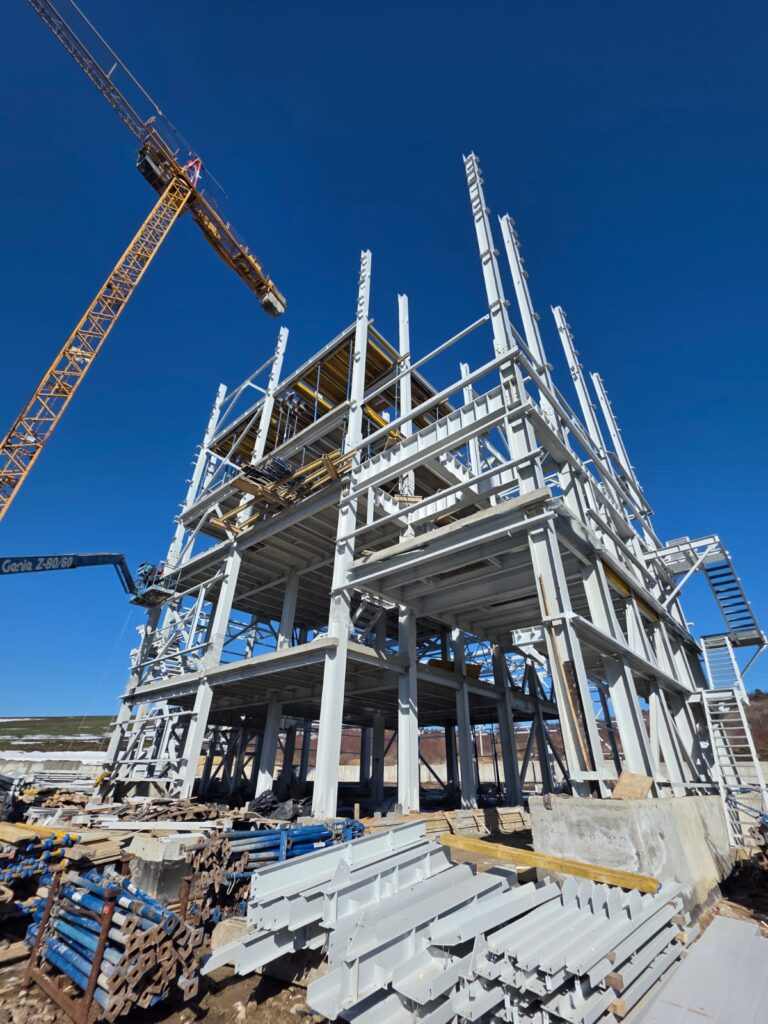
Today, modern feed production should be viewed not only as a technological asset but also as a strategic tool for agricultural business development. In the coming years, this trend is likely to become even stronger. Enterprises will require more automated and flexible production lines capable of working with different formulations and types of raw materials. The importance of energy efficiency, digital control, and predictive maintenance will continue to grow. At the same time, the ability to modernize production without completely rebuilding it will become increasingly valuable.
This is why a modern feed mill should be designed with room for future development. A technology that meets an enterprise’s needs today may prove insufficient within just a few years. However, if the system is initially designed to allow for expansion, the addition of new processing stages, or increased capacity, the enterprise gains far greater flexibility for future growth.
As a result, the question of equipment for feed production today goes far beyond choosing a specific machine. It is about creating a production environment in which raw materials move without unnecessary losses, formulations are maintained with high accuracy, process parameters are automatically controlled, equipment operates reliably, and energy is used as efficiently as possible.
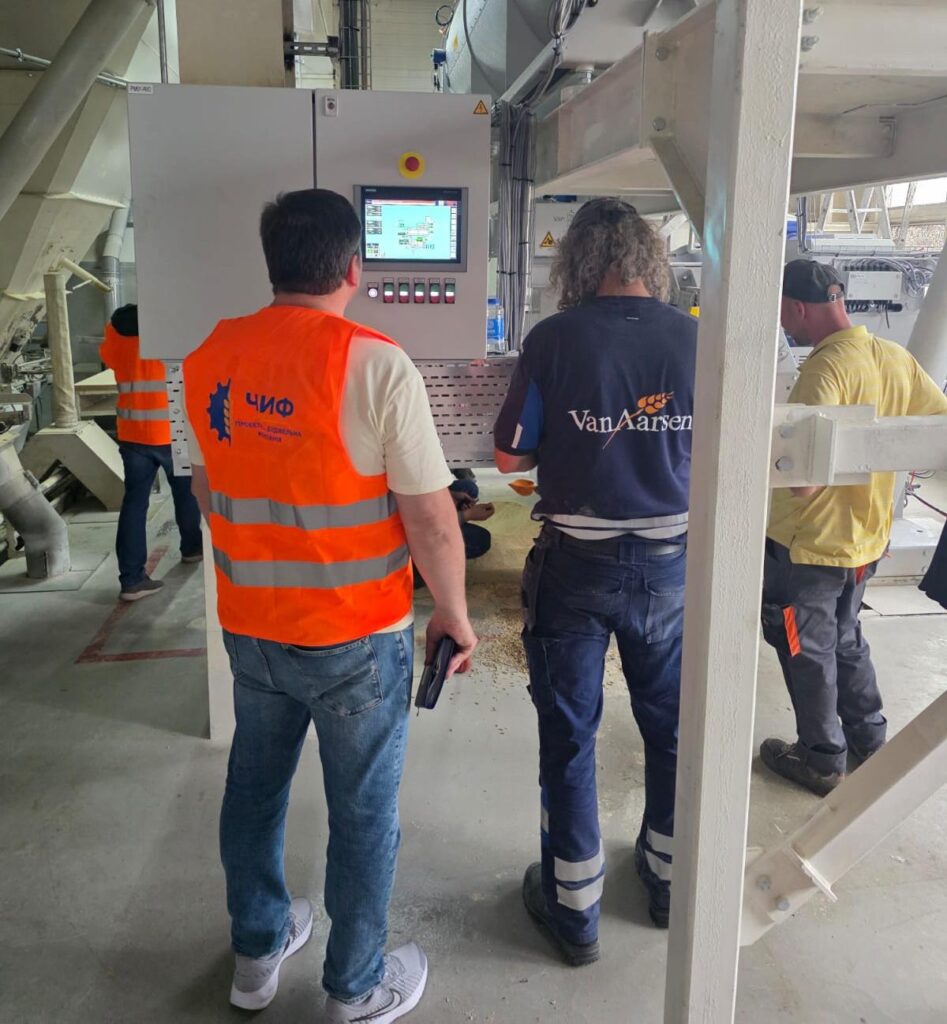
DCC CHIEF, in cooperation with Van Aarsen, demonstrates precisely this approach — combining process equipment, engineering solutions, automation, and service support. For the Ukrainian market, this is important not only from the perspective of individual enterprises. The development of modern feed production mills means deeper processing of agricultural raw materials, the creation of added value, and the gradual development of a more technologically advanced agricultural sector in Ukraine.
Ultimately, a modern feed mill is not simply a collection of machines under one roof. It is a production system that must answer one simple but critically important question every day: how efficiently does it transform raw materials, energy, and time into a high-quality finished product?
Therefore, the future of feed production lies in efficiency rather than scale alone. Enterprises will increasingly evaluate equipment based on how effectively it helps reduce costs, utilize raw materials without unnecessary losses, save energy, and minimize downtime. This is how a new philosophy of Ukrainian production is taking shape — modern, automated, technology-driven, and ready for long-term competition.