The Lviv region continues to strengthen its position as one of the most promising regions for the development of modern agro-industrial production. It is here that large-scale investment projects are increasingly being implemented, combining advanced technologies, engineering expertise, and a long-term vision for the development of Ukraine’s agricultural sector.
Further confirming this trend is a new large-scale project being implemented with the participation of the international company Van Aarsen and Design & Construction Company CHIEF. The future complex will be much more than just another production site — it will be a modern agro-industrial center that will help establish a new standard for feed production in the region.
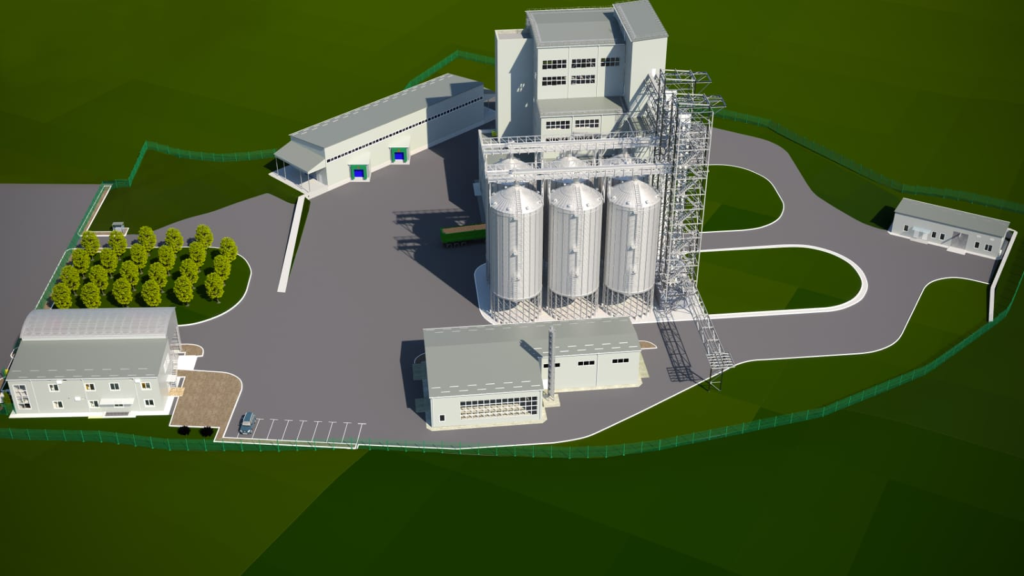
The preliminary concept envisions the construction of a modern feed mill with advanced production and logistics infrastructure. The project will include production buildings, silo groups, transportation hubs, auxiliary facilities, and areas designated for the future expansion of the complex. Particular attention is being given to the quality of engineering solutions, production ergonomics, and the creation of a modern industrial environment.
Today, the agricultural industry is undergoing a period of profound transformation. While feed production was once viewed purely as a technical process, it has now evolved into a fully developed high-tech industry, where engineering quality, production efficiency, sustainability, and operational reliability have become critically important factors.
Projects of this scale are effectively shaping a new industrial culture within Ukraine’s agricultural sector. They demonstrate that even in challenging economic conditions, businesses remain willing to invest in production, infrastructure, and the future of regional development. They also send a strong signal to international partners that Ukraine continues to be a country of opportunity for the implementation of large-scale industrial initiatives.
It is particularly significant that projects of this kind are being implemented in the western regions of Ukraine. The Lviv region is gradually becoming one of the key centers of modern agro-industrial infrastructure, where new production sites are being developed, logistics networks are expanding, and new opportunities for business are emerging.
A modern feed production complex is about much more than manufacturing alone. It also drives the development of transportation infrastructure, creates jobs, increases tax revenues for local communities, and stimulates related industries. The construction of such facilities involves dozens of companies and hundreds of professionals, including engineers, designers, construction specialists, logistics experts, technologists, and representatives of the manufacturing sector.
Today, Ukraine Needs Modern Industrial Infrastructure
Today, the feed industry is becoming one of the key areas of development within the agro-industrial sector. Intense market competition is pushing producers to align with modern standards of quality, productivity, and manufacturing efficiency. That is why new enterprises are being designed from the outset in accordance with the latest global trends.
“Today, Ukraine needs modern industrial infrastructure that meets international standards and enables the agricultural sector to develop with confidence. Projects like these are not simply about building enterprises. They are investments in the future of regions, in the development of production, and in creating new opportunities for people. We see tremendous potential in the Lviv region as a location for implementing modern agro-industrial initiatives,” notes Oleksandr Chumachenko, Director of DCC CHIEF.
According to him, modern production complexes must combine functionality, reliability, and a high level of operational organization. Particular attention is given to construction quality, well-planned infrastructure, and the creation of a comfortable and efficient production environment.
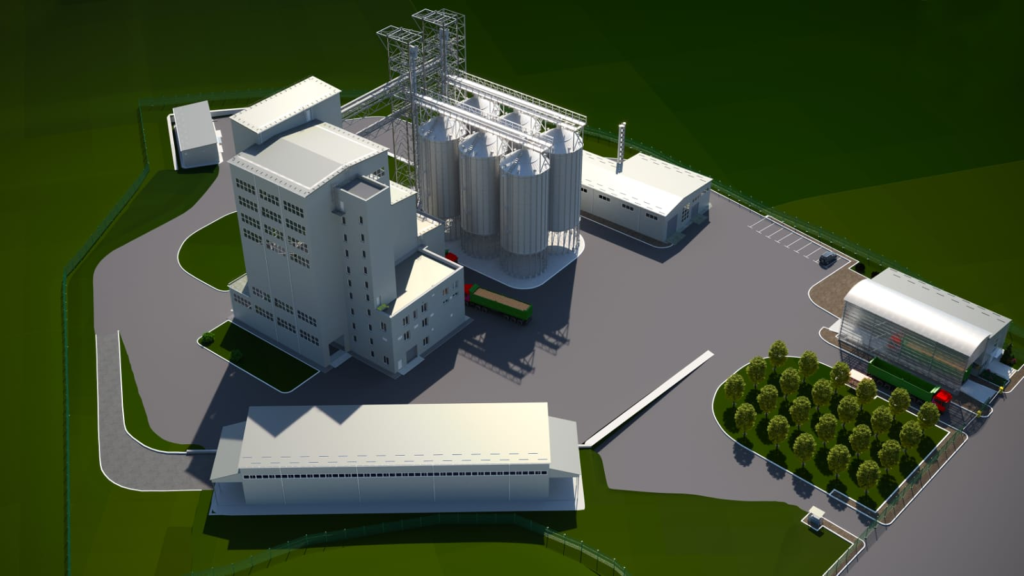
The new project incorporates modern approaches to site planning and facility organization. This includes efficient logistics, optimal placement of production areas, transportation routes, and supporting infrastructure. Such solutions help ensure the efficient operation of the complex while creating opportunities for its future expansion.
In addition, projects of this kind generate significant socio-economic benefits. The development of new industrial facilities stimulates local business activity, creates demand for contractor services, and positively impacts the overall economic vitality of the region.
Production Quality Begins with the Right Technological Approach
Anna Panchuk, Chief Technologist of DCC CHIEF, notes that successful feed production is built on the coordinated operation of all technological processes. According to her, the high quality of finished products is established at the very stage of raw material preparation and processing. That is why it is essential to maintain control over every production operation. The use of modern solutions from the Dutch company Van Aarsen contributes to production stability, improves operational efficiency, and ensures the production of high-quality feed products.
Modern feed production complexes have become far more sophisticated and large-scale than they were just a decade ago. Requirements for product quality, production organization, and the overall technological culture of enterprises continue to increase.
Energy efficiency is also a major consideration. New production complexes are designed to maximize resource utilization and ensure the long-term stability and efficiency of operations.
Modern technological solutions also provide greater flexibility in working with different types of raw materials and adapting production processes to changing market demands. This is particularly important in an environment of constant change within the agricultural sector and increasing competition.
According to industry experts, the development of modern production complexes will be one of the key factors in enhancing the international competitiveness of Ukraine’s agricultural sector. Ukraine has tremendous potential not only as a producer of raw materials, but also as a country with a strong and advanced processing industry.
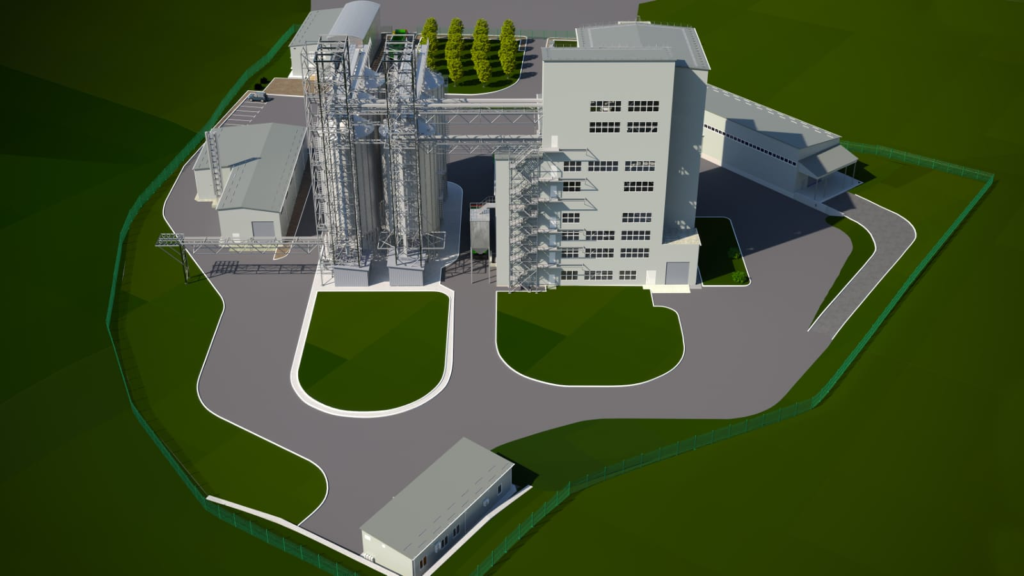
The new complex will also serve as an example of a modern approach to industrial architecture. Project visualizations demonstrate the scale of the future development, the well-planned site layout, and the integrated nature of all engineering solutions.
At the heart of the complex will be the main production buildings and the silo group, forming a unified production environment. Surrounding them will be logistics routes, transportation zones, and auxiliary facilities required to ensure the stable operation of the enterprise.
Particular attention has been given to site improvement and the overall organization of the space. Modern industrial facilities have long moved beyond a purely functional approach. Today, it is important to create a comfortable, thoughtfully designed, and aesthetically organized production environment.
Projects like this also reflect changing approaches to industrial development in Ukraine. Businesses are increasingly focused not only on the rapid creation of production capacity, but also on building high-quality infrastructure that meets modern international standards.
Modern Production Is a Combination of Engineering, Experience, and Strategic Vision
Modern agro-industrial complexes are essentially large-scale engineering systems in which every element must function as part of a single integrated mechanism.
Kyrylo, Lead Structural Engineer at DCC CHIEF, notes that “the implementation of projects of this scale requires a comprehensive approach and a deep understanding of modern production processes. When developing such complexes, it is important to consider not only the current needs of the enterprise, but also its future growth potential. Well-planned logistics, proper site organization, and the reliability of all structural solutions play a critical role.”
During the design phase, special attention is given to safety, structural reliability, and the efficient use of available space. It is this integrated approach that makes it possible to create facilities capable of operating reliably and efficiently for many years.
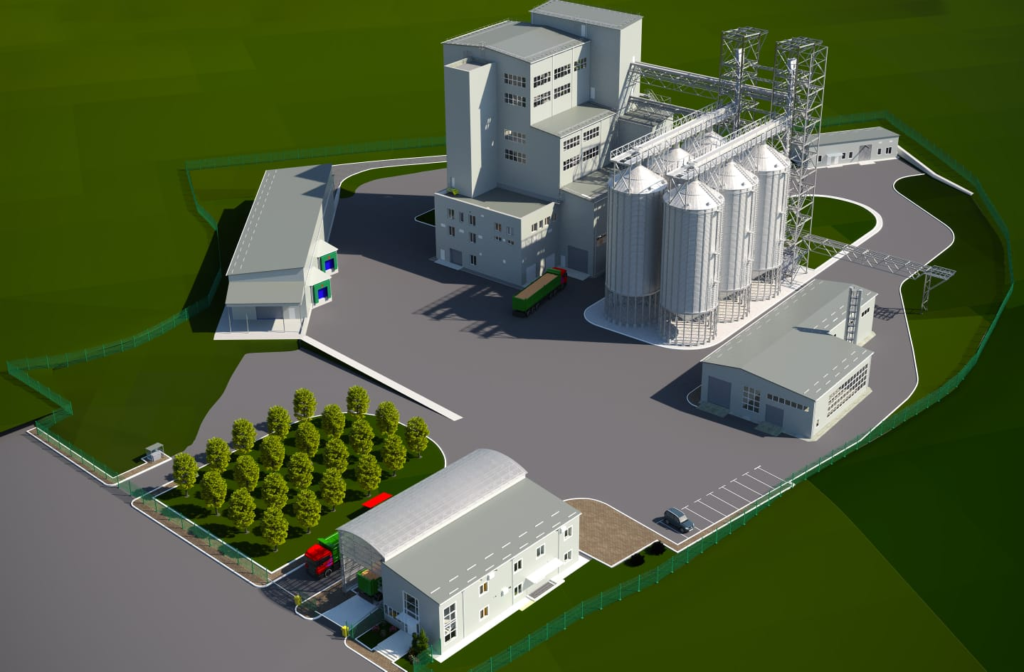
Today, Ukraine’s agro-industrial sector continues to demonstrate its ability to grow and evolve even under challenging conditions. The implementation of new production projects is clear evidence that businesses see long-term opportunities and remain willing to invest in sustainable development.
International partnerships and the combination of expertise from companies specializing in different areas of agro-industrial development play a particularly important role in the successful execution of such projects. The cooperation between DCC CHIEF and the Dutch company Van Aarsen brings together Ukrainian expertise in the design and construction of production facilities with world-class technological solutions. This collaboration facilitates the implementation of proven engineering and manufacturing approaches that are already successfully applied at enterprises across many countries around the world.
For Ukraine’s livestock sector, the development of modern feed production facilities is of strategic importance. The quality of feed directly influences farm efficiency, livestock productivity, and the competitiveness of agricultural businesses. That is why DCC CHIEF actively participates in the development of new production capacities, offering comprehensive solutions ranging from design and engineering support to project implementation.
The construction of the new production complex in the Lviv region with the participation of Van Aarsen and DCC CHIEF demonstrates the commitment of Ukrainian businesses to developing modern agricultural infrastructure and investing in promising sectors. The project is expected to become another important step toward strengthening Ukraine’s feed industry, where modern European production technologies, a comprehensive design approach, and a strong focus on future development will play a defining role.