How to Build a Feed Mill That Operates Efficiently
A few years ago, a conversation about a feed mill could easily have started with a simple question: how many tonnes per hour does it produce? Today, that is no longer enough. For modern agribusiness, production capacity alone does not answer the most important question: how profitable will this production operation be?

Ukraine’s agricultural sector is gradually changing. Businesses increasingly aim not simply to grow grain but to process it, create products with higher added value, and control as much of the production chain as possible. Within this system, a feed mill plays a special role. It can become the bridge that transforms harvested grain into a driver of growth for a livestock or poultry business. And this is where things get particularly interesting. A modern feed mill is no longer simply a collection of machines under one roof. It is a complex technological system in which an error at one stage inevitably affects the entire production process. From grain receiving to the dispatch of finished feed, everything must operate as a single integrated mechanism. In effect, today’s investor is not simply buying equipment. They are investing in the future efficiency of their enterprise.
From Grain to Finished Product
Ukrainian agriculture has one major competitive advantage: a significant supply of its own raw materials. But today, the question is no longer simply how much grain an enterprise can grow. It is equally important to determine how much added value it can create from every tonne. Grain can be sold immediately after harvest. It can be stored while waiting for more favourable market prices. Or the next step can be taken: transforming the company’s own raw materials into feed and using it in its own livestock or poultry production. In such a model, a feed mill becomes much more than simply a production site. It allows an enterprise to control formulations, raw material quality, feed costs, and production stability. Most importantly, it reduces dependence on external suppliers and provides greater flexibility to respond to market changes.
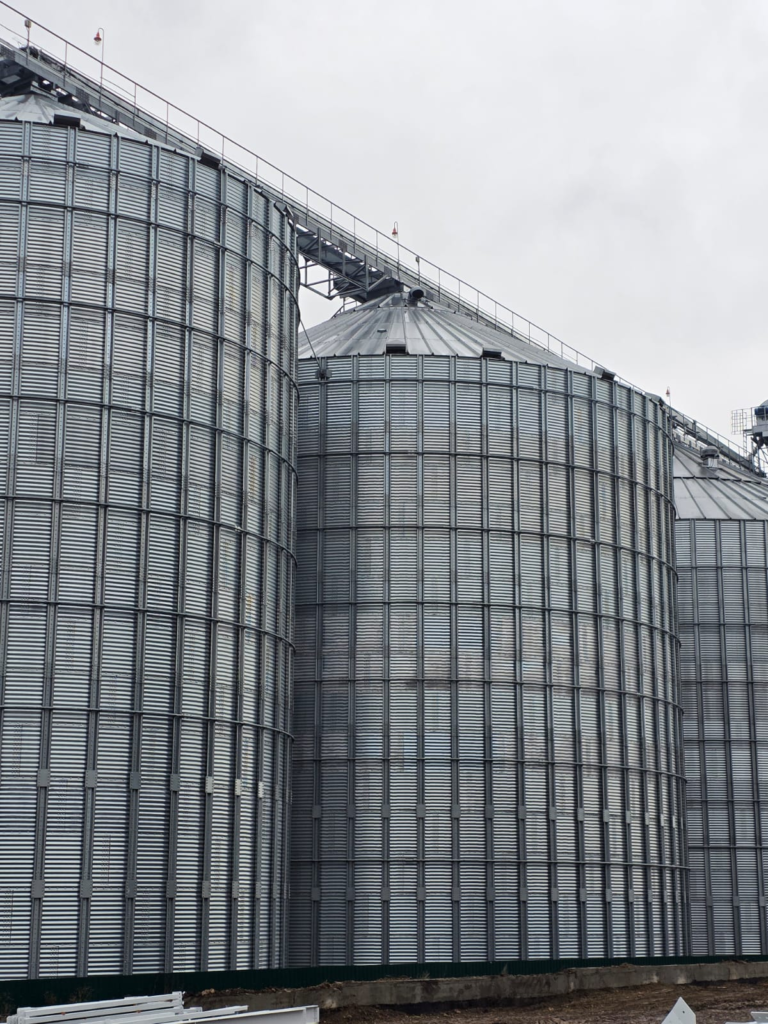
This is particularly important when the cost of grain, logistics, energy, and other production inputs can fluctuate significantly. In-house processing allows an agricultural enterprise to build a more controlled and predictable production chain. In a sense, a feed mill becomes the centre of vertical integration, connecting raw material production, processing, and subsequent livestock or poultry production. That is why interest in modern feed mills in Ukraine is driven not only by the desire to increase production capacity. For many companies, it is primarily about controlling production costs, improving efficiency, and creating added value within their own business.
Should You Build New or Give an Existing Facility a Second Life?
For many Ukrainian enterprises today, the question is not so much, “What new plant should we build?” but rather, “How can we modernize what is already operating?” And that is a much more complex task. New equipment must be integrated into an existing building while taking into account existing foundations, material handling systems, electrical networks, and engineering utilities. At the same time, production often needs to continue operating. Any prolonged shutdown can result in direct financial losses.
Therefore, modernization is not simply a matter of replacing an old machine with a new one. It is a comprehensive task that requires technological, structural, and engineering aspects to be considered simultaneously. This is where the role of design-build and engineering companies such as DCC CHIEF becomes particularly evident. For the client, it is important that technological solutions do not exist separately from the actual site but are adapted to its structural characteristics, production processes, and prospects for further development.

DCC CHIEF works with both new construction and the modernization and reconstruction of industrial sites, combining design, construction solutions, technological equipment supply, and installation. This approach makes it possible to view modernization not as an isolated equipment replacement, but as an opportunity to systematically upgrade production while preserving its functionality and improving its efficiency.
Why Companies Are Choosing a Partner Rather Than Just a Supplier
The market offers manufacturers of virtually any type of equipment. But there is a huge difference between purchasing an individual machine and creating a complete production plant. Someone needs to design the entire site. Someone must ensure equipment compatibility. Someone needs to organize installation, automation, commissioning, and subsequent maintenance. That is why comprehensive engineering is becoming increasingly important for complex agro-industrial projects.

DCC CHIEF operates according to this principle, combining design, equipment supply, installation, steel structures, and service. The company has experience working with grain storage complexes, feed mills, oil extraction plants, and flour mills. For an investor, this means one thing above all: there is no need to assemble a complex project from dozens of independent contractors while trying to coordinate their work independently. This integrated approach is one of the reasons why DCC CHIEF should be considered a partner for developing or modernizing an agro-industrial enterprise.
The Savings You Don't See at the Beginning
Some costs are easy to see in a budget: equipment, construction work, steel structures, and installation. But there is another category of costs that an investor only experiences after a plant starts operating. These include electricity consumption, downtime, maintenance, raw material losses, unnecessary material handling operations, difficult access to equipment, repair costs, and the time required to change production modes. That is why a less expensive plant does not always mean lower production costs. Equipment should be evaluated not only by its initial price but also by its reliability, process performance, operational stability, and expected operating costs.
If the process layout forces raw materials to travel unnecessary distances, equipment operates under excessive loads, and maintenance requires lengthy shutdowns, the initial savings quickly lose their value. At the same time, high-quality technological equipment, properly integrated into the overall production system, can provide process stability, predictable performance, and consistent finished-product quality. Modern design increasingly considers not only the price of equipment but the total lifecycle economics—from investment and installation to energy consumption, maintenance, reliability, and performance over many years of operation.
As a result, high-quality equipment becomes not simply an investment-budget item but a tool for the long-term efficiency of an enterprise. That is why, when creating a feed mill, it is important to evaluate not an individual machine, but how it will perform as part of the entire technological system.
The Pellet Mill Does Not Solve Every Problem
The pellet mill is often called the heart of a feed mill. This is where the prepared mixture, under the influence of pressure, temperature, and mechanical action, is transformed into finished pellets that can then be stored, transported, and used in production. However, the experience of industrial enterprises shows that even the most advanced equipment cannot compensate for mistakes made at earlier stages. If the raw materials are not ground properly, the formulation is dosed inaccurately, the mixture is not sufficiently homogeneous, or it is improperly prepared before pelleting, the pellet mill’s capabilities cannot be fully utilized. This can affect not only production capacity but also process stability, finished pellet quality, and energy consumption.

Therefore, a good feed mill does not begin with the question, “Which pellet mill should we buy?” It begins with the question, “How should the entire plant operate?”
It is the technological concept that determines how raw material flows will be organized, where production areas will be located, how dosing and mixing systems will operate, what the product preparation process before pelleting will look like, where potential bottlenecks may arise, and how easily the enterprise will be able to increase production in the future. As a result, pelleting efficiency is determined long before the product reaches the pellet mill. Every preceding stage must support the next one, while the entire production process must function as a single technological system.
Technology Begins with Preparation
Particular attention in feed production is given to conditioning before pelleting. At this stage, the mixture is prepared for the pellet mill by reaching the required temperature, moisture content, and structure. Modern conditioning is no longer simply a matter of adding steam. It is important to ensure uniform treatment of the product and to select the appropriate retention time in the conditioner according to the specific formulation.

A notable example of this approach is Van Aarsen’s Long Term Vessel (LTV), a conditioning system designed to provide longer and more controlled product preparation before pelleting. Unlike conventional short-term conditioning, the LTV principle makes it possible to regulate the product’s retention time in the system according to the specific technological requirements of the feed.
Optimal processing conditions may differ for different formulations. Some products require a shorter treatment time, while others need longer conditioning. That is why the ability to control this parameter becomes an important technological advantage. According to the manufacturer, this technology can increase pelleting capacity by up to 20–25% and reduce energy consumption by up to 20%.
The key consideration remains how the conditioner is integrated into the overall process flow. Steam supply, moisture dosing, product conveying, interaction with the pellet mill, and subsequent production stages must all be properly organized. That is why equipment selection should take place simultaneously with the development of the plant’s overall technological concept. It is possible to purchase world-class equipment, but if it is not properly integrated into the production system, a significant portion of its potential advantages will remain unused.
Automation Is No Longer a Luxury
A few years ago, automation could be perceived as an additional advantage for an enterprise. Today, it is becoming one of the fundamental elements of a modern feed mill. Complex formulations, a large number of components, and the need to ensure consistent product quality require maximum precision at every stage. This is particularly important for micro-dosing, where even a small amount of an individual component can significantly affect the characteristics of the finished feed.
Automated systems make it possible to control formulations, dosing, the sequence of technological operations, and production repeatability. This reduces the impact of human factors and helps maintain stable operating parameters throughout the plant. For an engineering company, automation also means the need to properly integrate technological equipment, control systems, and production logic. This comprehensive approach makes it possible to create not simply automated individual production areas, but an integrated production management system.
As a result, a modern feed mill is gradually becoming a digital production environment in which equipment and software systems work together to provide control, stability, and predictable results.
DCC CHIEF: From Design to Operational Production
Creating a feed mill is a decision for years to come. That is why such a project should begin not with an equipment catalogue, but with a professional discussion about the future of the enterprise.
DCC CHIEF is open to cooperation with agricultural companies, investors, and processing businesses planning to build new production capacities or modernize existing ones. The company can join a project at different stages, from concept development and design to equipment supply, installation, commissioning, and service support.
Website: pbk-chief.com
E-mail: info@pbk-chief.com
Telephone: +38 (050) 836-20-05
LinkedIn: Design & Construction Company “CHIEF”
Facebook: Проєктно-будівельна компанія «ЧИФ»